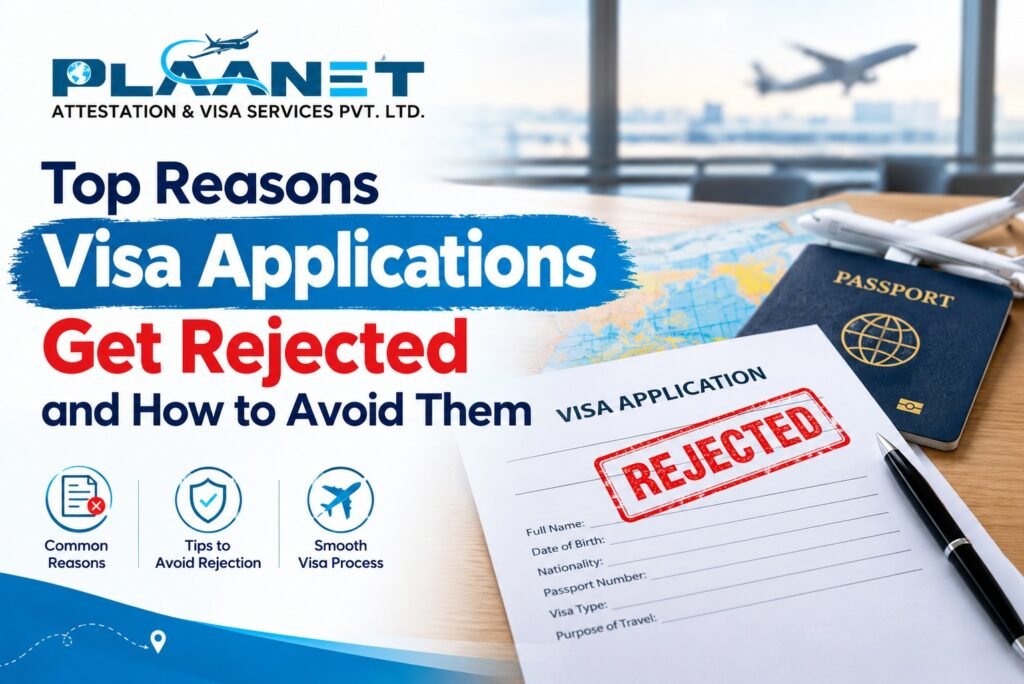
Every year, millions of people submit Visa Applications to travel abroad for tourism, higher education, employment, business opportunities, medical treatment, or family reunification. While many applications are approved, a significant number are rejected due to mistakes that could have been easily avoided. A visa refusal can be disappointing, expensive, and may even impact future travel plans if the reasons for rejection are not addressed properly.
The visa approval process is much more than simply filling out an application form. Immigration authorities carefully evaluate your documents, financial background, travel purpose, previous travel history, and overall eligibility before making a decision. Even a small error or missing document can lead to delays or rejection.
Understanding why Visa Applications get rejected is the first step toward improving your chances of approval. By preparing your documents correctly, being honest throughout the process, and following embassy guidelines, you can significantly increase your chances of receiving your visa.
If you need professional assistance with visa documentation, certificate attestation, apostille services, or embassy legalization, Plaanet Attestation & Visa Services is here to help. Visit https://plaanetattestation.com/ for expert guidance and end-to-end visa support.
Why Are Visa Applications Rejected?
Visa officers are responsible for ensuring that applicants meet all immigration requirements. Their job is to verify that applicants have genuine intentions, sufficient financial resources, accurate documentation, and meet the legal requirements of the destination country.
Every country has different visa policies, but the most common reasons for rejection are surprisingly similar across embassies.
Let’s explore each one in detail.
- Incomplete Documentation
Incomplete paperwork is one of the leading reasons why Visa Applications are rejected.
Embassies require a specific list of documents depending on your visa type. Missing even one mandatory document can delay processing or result in an outright refusal.
Common missing documents include:
- Passport copies
- Passport-size photographs
- Bank statements
- Salary slips
- Income Tax Returns (ITR)
- Flight reservations
- Hotel bookings
- Travel insurance
- Employment certificate
- University admission letter
- Invitation letter
- Birth or marriage certificates
- Educational certificates
- Properly attested documents
Many applicants assume optional documents are unnecessary, but supporting documents often strengthen the application.
How to Avoid It
- Carefully review the embassy’s latest checklist.
- Keep both original and photocopies ready.
- Organize documents in the required order.
- Verify expiry dates.
- Get all required certificates attested before submission.
- Incorrect or False Information
Visa officers cross-check every detail you provide.
Even small inconsistencies between your passport, application form, bank records, employment documents, or supporting letters may raise concerns.
Examples include:
- Different spellings of your name
- Wrong passport number
- Incorrect travel dates
- Fake employment certificates
- Edited bank statements
- Incorrect address
- Wrong marital status
Providing false information can result not only in rejection but also in future visa bans in some countries.
How to Avoid It
Before submitting your Visa Applications, verify every detail carefully.
Never submit fake documents.
If there has been any change in your circumstances, disclose it honestly.
- Insufficient Financial Proof
Immigration authorities need confidence that you can financially support yourself during your stay.
Applicants commonly get rejected because:
- Bank balance is too low
- Recent unexplained cash deposits
- Irregular income
- Missing salary proof
- No sponsor documents
- Incomplete financial history
Financial stability demonstrates that you are less likely to overstay or work illegally.
Documents that Strengthen Financial Proof
- Six-month bank statements
- Salary slips
- Income Tax Returns
- Fixed Deposits
- Investment statements
- Sponsor affidavit
- Business registration documents
How to Avoid It
Maintain a healthy bank balance for several months before applying.
Avoid depositing large sums just before submitting your application unless you can clearly explain the source.
- Weak Travel History
Although first-time travelers can certainly obtain visas, applicants with a strong travel history often appear more credible.
If you’ve previously complied with immigration rules in other countries, visa officers gain additional confidence.
How to Improve
Travel to countries with simpler visa requirements before applying for destinations with stricter immigration policies.
Always return before your visa expires.
- Invalid Passport
Many people forget to check passport validity.
Common issues include:
- Passport expires within six months
- Torn or damaged pages
- Missing pages
- Water damage
- Insufficient blank pages
How to Avoid It
Renew your passport well before applying.
Ensure your passport remains valid according to your destination country’s immigration rules.
- Unclear Purpose of Travel
Your travel purpose should be genuine, consistent, and well-supported.
Examples include:
Tourist Visa
Provide:
- Hotel bookings
- Flight reservations
- Day-wise itinerary
- Leave approval letter
Student Visa
Provide:
- University admission letter
- Tuition fee receipt
- Financial support documents
- Academic certificates
Work Visa
Provide:
- Employment contract
- Offer letter
- Employer sponsorship
- Work permit (if required)
Business Visa
Provide:
- Invitation letter
- Business registration
- Conference details
- Meeting schedule
If your purpose appears unclear, your Visa Applications become weaker.
- Poorly Prepared Visa Interview
Countries like the USA and Canada often require visa interviews.
Many applicants become nervous and provide inconsistent answers.
Common mistakes include:
- Memorized answers
- Contradicting application details
- Lack of confidence
- Not knowing employer details
- Unable to explain travel purpose
Interview Tips
- Speak honestly.
- Answer only what is asked.
- Carry all supporting documents.
- Dress professionally.
- Remain calm.
- Missing Document Attestation
Many countries require documents to be officially attested before visa submission.
Documents commonly requiring attestation include:
- Degree certificates
- Diploma certificates
- Birth certificates
- Marriage certificates
- Police Clearance Certificates
- Commercial documents
Without proper attestation, your documents may not be accepted.
Professional attestation services save time and reduce mistakes.
- Criminal Record or Legal Issues
Immigration authorities conduct background verification.
Serious criminal convictions, fraud, immigration violations, or security concerns can lead to rejection.
How to Avoid It
Declare information honestly if required.
Provide legal documents where applicable.
- Previous Visa Rejections
Many applicants think a previous rejection automatically prevents future approval.
This is not true.
However, repeatedly submitting identical applications without correcting previous issues usually leads to another refusal.
Improve Future Visa Applications By
- Reading the refusal letter carefully.
- Correcting every deficiency.
- Adding stronger supporting documents.
- Seeking professional guidance.
- Choosing the Wrong Visa Category
Selecting an incorrect visa type causes unnecessary delays.
Examples include:
- Tourist instead of Business Visa
- Visitor instead of Student Visa
- Student instead of Research Visa
- Work instead of Dependent Visa
Always verify eligibility before applying.
- Lack of Strong Home Country Ties
Visa officers often evaluate whether applicants are likely to return home.
Strong ties include:
- Permanent employment
- Business ownership
- Family responsibilities
- Property ownership
- Ongoing education
The stronger your ties, the more convincing your application becomes.
- Poorly Organized Documents
A disorganized application creates unnecessary confusion.
Arrange documents in the embassy’s preferred order.
Use labeled folders and avoid submitting damaged papers.
- Applying Too Late
Many people wait until the last minute.
Unexpected delays may occur because of:
- Public holidays
- Embassy workload
- Additional verification
- Missing documents
Apply several weeks—or months—before your intended travel date whenever possible.
- Lack of Travel Insurance
Many countries, especially in the Schengen Area, require valid travel medical insurance.
Insurance should cover:
- Medical emergencies
- Hospitalization
- Emergency evacuation
- Trip interruption (where applicable)
Always confirm the minimum coverage required for your destination.
Expert Tips to Improve Visa Applications
Follow these best practices:
- Read embassy instructions carefully.
- Complete every section of the application form.
- Submit accurate information.
- Maintain sufficient financial proof.
- Keep your passport valid.
- Obtain required document attestation.
- Organize supporting documents.
- Purchase travel insurance if required.
- Prepare thoroughly for interviews.
- Apply well in advance.
- Avoid fake or altered documents.
- Be honest about previous travel history.
Why Choose Plaanet Attestation & Visa Services?
Preparing Visa Applications can be complicated, especially when multiple documents require verification, attestation, and legalization. Plaanet Attestation & Visa Services provides reliable support to simplify the process.
Our services include:
- Visa Consultation
- Tourist Visa Assistance
- Student Visa Assistance
- Work Visa Support
- Business Visa Assistance
- Educational Certificate Attestation
- Birth Certificate Attestation
- Marriage Certificate Attestation
- HRD Attestation
- MEA Apostille
- Embassy Attestation
- Commercial Document Attestation
- Translation Services
- Document Verification
Our experienced professionals help ensure your paperwork is accurate, complete, and submitted according to the latest requirements, helping reduce avoidable delays and mistakes.
Visit https://plaanetattestation.com/ to learn more about our visa and attestation services.
Frequently Asked Questions (FAQs)
Can I apply again after my visa is rejected?
Yes. A rejection does not permanently prevent you from applying again. However, you should first identify the reason for refusal, correct the issues, and submit a stronger application.
Does a visa rejection affect future Visa Applications?
It can. Many visa forms ask about previous refusals, so honesty is essential. A previous rejection does not automatically mean future applications will be refused if you have addressed the original concerns.
Is document attestation necessary for every visa?
No. The requirement depends on the destination country and visa category. Student, work, employment, and family visas often require attested educational or personal documents.
How long does the visa process take?
Processing times vary depending on the country, visa type, season, and whether additional verification is required. Applying early is always recommended.
Conclusion
Visa rejection is often the result of preventable mistakes rather than ineligibility. Incomplete paperwork, incorrect information, insufficient financial proof, missing document attestation, weak travel purpose, or choosing the wrong visa category are among the most common reasons Visa Applications are refused.
By understanding embassy requirements, preparing complete documentation, and submitting accurate information, you can greatly improve your chances of success.
Whether you’re applying for a tourist, student, work, business, or family visa, professional guidance can make the process much smoother. Plaanet Attestation & Visa Services offers expert assistance with visa documentation, attestation, apostille, and legalization services to help you move forward with confidence.
Visit https://plaanetattestation.com/ today and let our experts assist you with your next Visa Applications.