October 2026

Degree Attested

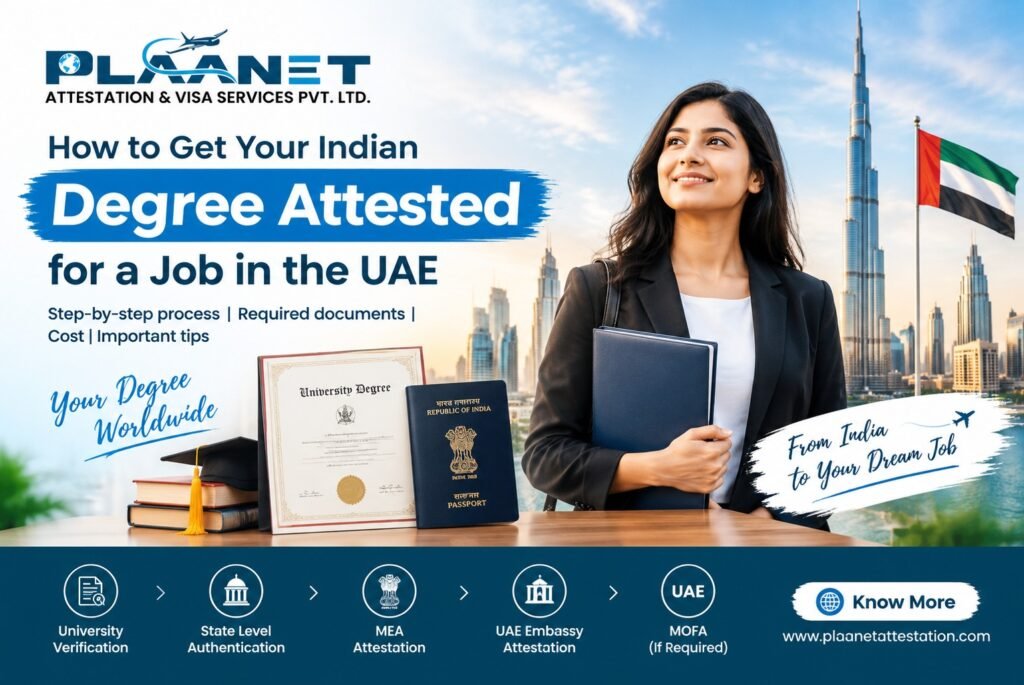
How to Get Your Indian Degree Attested for a Job in the UAE

Post Views: 7 The United Arab Emirates (UAE) has become a popular destination for Indian professionals looking for better career opportunities, international exposure, and professional growth. Cities such as Dubai, Abu Dhabi, and Sharjah attract skilled workers from various industries, including information technology, engineering, healthcare, education, finance, and management. If you have received a job offer in the UAE, your employer may ask you to submit an authenticated educational certificate as part of the employment documentation process. Understanding how to get your Indian degree attested can help you prepare the necessary documents and avoid unnecessary delays. Many applicants search for information about getting their Degree Attested before moving abroad. However, the procedure may differ depending on the university, state where the certificate was issued, type of qualification, and requirements of the UAE employer or relevant authority. In this comprehensive guide, we will explain the degree attestation process, required documents, estimated costs, common mistakes, and important considerations for Indian professionals planning to work in the UAE. For information about document attestation services, you can also visit Plaanet Attestation & Visa Services. What Is Degree Attestation? Degree attestation is the process of authenticating an educational certificate for use in another country. It helps establish that the document has undergone the required verification and authentication procedures. For Indian professionals travelling to the UAE for employment, degree attestation may be required by an employer or the relevant authorities, depending on the job position and applicable regulations. The process can involve verification by the issuing university or relevant state authority, authentication by the Ministry of External Affairs (MEA), and UAE Embassy attestation or legalization, followed by UAE-side authentication where required. If you need your Degree Attested for employment purposes, it is essential to identify the correct procedure before submitting your original certificate. Why Is Degree Attestation Required for Jobs in the UAE? Degree attestation can be an important part of employment documentation for Indian professionals. The specific requirement depends on the employer, job category, work-permit procedure, and applicable regulations. Verification of Educational Qualifications Employers may request an attested degree certificate to help verify your educational qualifications. This is particularly relevant when a specific academic qualification is required for the position. Employment and Work-Permit Documentation Some employment and work-permit processes require authenticated educational documents. Your employer or recruitment team can confirm whether degree attestation is necessary for your particular role. Professional and Skilled Positions Certain roles in engineering, healthcare, education, and other regulated professions may involve additional qualification verification or approval from the relevant professional authority. Employer Compliance Requirements Companies may request authenticated educational documents as part of their internal recruitment, onboarding, or compliance procedures. Preparation for an International Career Completing the required documentation in advance can help you organize your employment paperwork before relocating to the UAE. Step-by-Step Process to Get Your Indian Degree Attested for a Job in the UAE The exact procedure may vary according to the state, university, certificate type, and current requirements. The following steps provide a general overview of the process. Step 1: Confirm the Requirements with Your UAE Employer Before starting the process, ask your employer which educational documents need to be attested. Confirm whether you need to submit: Your original degree certificate. Academic marksheets or transcripts. Additional educational qualifications. University verification documents. Other supporting documents requested by the employer or relevant authority. You should also confirm which authentication stages are required and whether your employer will arrange any part of the procedure. Step 2: Complete University or State-Level Verification Depending on the applicable procedure, your degree may need to be verified by the issuing university, a designated verification authority, or the relevant state department. Some educational certificates require state-level authentication or HRD-related verification before they can proceed to the next stage. The requirements differ according to the certificate and issuing state. Therefore, confirm the correct procedure for your specific degree instead of assuming that all universities follow the same process. Step 3: Obtain MEA Attestation The Ministry of External Affairs (MEA), Government of India, provides document authentication services for documents intended for use abroad. Once the required preliminary verification has been completed, the certificate can proceed through the applicable MEA authentication process. Make sure your documents meet the current submission requirements. Incorrect details, missing verification, or incomplete paperwork may lead to additional processing time. Step 4: Complete UAE Embassy Attestation or Legalization After the relevant Indian authentication stages, the document may need UAE Embassy attestation or the applicable legalization procedure in India. This stage helps authenticate the educational document for use in the UAE, subject to the requirements applicable to your case. Before submitting your original degree certificate, verify the current procedure, submission channel, and supporting documentation requirements. Step 5: Complete UAE MOFA Attestation if Required Depending on the applicable process, further authentication through the UAE Ministry of Foreign Affairs (MOFA) may be required. The appropriate procedure can depend on how the document was submitted, the authentication already completed, and the requirements of the receiving employer or authority. Confirm whether this stage is required and whether it will be arranged by your employer or through a service provider. Step 6: Submit Your Attested Degree Certificate Once the required authentication stages have been completed, submit the certificate and any additional documents requested by your employer. Keep copies of your educational certificates, application details, and submission receipts for future reference. If you need help understanding the applicable process, visit Plaanet Attestation & Visa Services to explore the available document attestation services and enquire about your requirements. Documents Required for Degree Attestation in India The documents required for degree attestation can vary according to your university, state, certificate type, and submission procedure. Commonly requested documents may include: Original degree certificate. Valid passport copy. Academic marksheets or transcripts, if required. University verification or supporting educational records, where applicable. Authorization letter, if a representative is submitting documents on your behalf. Application form and other supporting documents requested by the relevant authority. Additional documentation may be necessary depending on the individual case. Before

How to Get Your Indian Degree Attested for a Job in the UAE Read More »

Embassy Attestation
Visa Applications

Top Reasons Visa Applications Get Rejected and How to Avoid Them

Post Views: 20 Every year, millions of people submit Visa Applications to travel abroad for tourism, higher education, employment, business opportunities, medical treatment, or family reunification. While many applications are approved, a significant number are rejected due to mistakes that could have been easily avoided. A visa refusal can be disappointing, expensive, and may even impact future travel plans if the reasons for rejection are not addressed properly. The visa approval process is much more than simply filling out an application form. Immigration authorities carefully evaluate your documents, financial background, travel purpose, previous travel history, and overall eligibility before making a decision. Even a small error or missing document can lead to delays or rejection. Understanding why Visa Applications get rejected is the first step toward improving your chances of approval. By preparing your documents correctly, being honest throughout the process, and following embassy guidelines, you can significantly increase your chances of receiving your visa. If you need professional assistance with visa documentation, certificate attestation, apostille services, or embassy legalization, Plaanet Attestation & Visa Services is here to help. Visit https://plaanetattestation.com/ for expert guidance and end-to-end visa support.   Why Are Visa Applications Rejected? Visa officers are responsible for ensuring that applicants meet all immigration requirements. Their job is to verify that applicants have genuine intentions, sufficient financial resources, accurate documentation, and meet the legal requirements of the destination country. Every country has different visa policies, but the most common reasons for rejection are surprisingly similar across embassies. Let’s explore each one in detail.   Incomplete Documentation Incomplete paperwork is one of the leading reasons why Visa Applications are rejected. Embassies require a specific list of documents depending on your visa type. Missing even one mandatory document can delay processing or result in an outright refusal. Common missing documents include: Passport copies Passport-size photographs Bank statements Salary slips Income Tax Returns (ITR) Flight reservations Hotel bookings Travel insurance Employment certificate University admission letter Invitation letter Birth or marriage certificates Educational certificates Properly attested documents Many applicants assume optional documents are unnecessary, but supporting documents often strengthen the application. How to Avoid It Carefully review the embassy’s latest checklist. Keep both original and photocopies ready. Organize documents in the required order. Verify expiry dates. Get all required certificates attested before submission. Incorrect or False Information Visa officers cross-check every detail you provide. Even small inconsistencies between your passport, application form, bank records, employment documents, or supporting letters may raise concerns. Examples include: Different spellings of your name Wrong passport number Incorrect travel dates Fake employment certificates Edited bank statements Incorrect address Wrong marital status Providing false information can result not only in rejection but also in future visa bans in some countries. How to Avoid It Before submitting your Visa Applications, verify every detail carefully. Never submit fake documents. If there has been any change in your circumstances, disclose it honestly.   Insufficient Financial Proof Immigration authorities need confidence that you can financially support yourself during your stay. Applicants commonly get rejected because: Bank balance is too low Recent unexplained cash deposits Irregular income Missing salary proof No sponsor documents Incomplete financial history Financial stability demonstrates that you are less likely to overstay or work illegally. Documents that Strengthen Financial Proof Six-month bank statements Salary slips Income Tax Returns Fixed Deposits Investment statements Sponsor affidavit Business registration documents How to Avoid It Maintain a healthy bank balance for several months before applying. Avoid depositing large sums just before submitting your application unless you can clearly explain the source.   Weak Travel History Although first-time travelers can certainly obtain visas, applicants with a strong travel history often appear more credible. If you’ve previously complied with immigration rules in other countries, visa officers gain additional confidence. How to Improve Travel to countries with simpler visa requirements before applying for destinations with stricter immigration policies. Always return before your visa expires.   Invalid Passport Many people forget to check passport validity. Common issues include: Passport expires within six months Torn or damaged pages Missing pages Water damage Insufficient blank pages How to Avoid It Renew your passport well before applying. Ensure your passport remains valid according to your destination country’s immigration rules.   Unclear Purpose of Travel Your travel purpose should be genuine, consistent, and well-supported. Examples include: Tourist Visa Provide: Hotel bookings Flight reservations Day-wise itinerary Leave approval letter Student Visa Provide: University admission letter Tuition fee receipt Financial support documents Academic certificates Work Visa Provide: Employment contract Offer letter Employer sponsorship Work permit (if required) Business Visa Provide: Invitation letter Business registration Conference details Meeting schedule If your purpose appears unclear, your Visa Applications become weaker.   Poorly Prepared Visa Interview Countries like the USA and Canada often require visa interviews. Many applicants become nervous and provide inconsistent answers. Common mistakes include: Memorized answers Contradicting application details Lack of confidence Not knowing employer details Unable to explain travel purpose Interview Tips Speak honestly. Answer only what is asked. Carry all supporting documents. Dress professionally. Remain calm.   Missing Document Attestation Many countries require documents to be officially attested before visa submission. Documents commonly requiring attestation include: Degree certificates Diploma certificates Birth certificates Marriage certificates Police Clearance Certificates Commercial documents Without proper attestation, your documents may not be accepted. Professional attestation services save time and reduce mistakes.   Criminal Record or Legal Issues Immigration authorities conduct background verification. Serious criminal convictions, fraud, immigration violations, or security concerns can lead to rejection. How to Avoid It Declare information honestly if required. Provide legal documents where applicable.   Previous Visa Rejections Many applicants think a previous rejection automatically prevents future approval. This is not true. However, repeatedly submitting identical applications without correcting previous issues usually leads to another refusal. Improve Future Visa Applications By Reading the refusal letter carefully. Correcting every deficiency. Adding stronger supporting documents. Seeking professional guidance.   Choosing the Wrong Visa Category Selecting an incorrect visa type causes unnecessary delays. Examples include: Tourist instead of Business Visa Visitor instead of Student

Top Reasons Visa Applications Get Rejected and How to Avoid Them Read More »

Embassy Attestation
HRD Attestation in Delhi

HRD Attestation in Delhi: Everything You Need to Know (Complete Guide)

Post Views: 29 Planning to study abroad, secure an overseas job, or apply for a work visa? One of the most important steps you’ll likely encounter is HRD Attestation in Delhi. Educational certificates issued in India often require verification before they can be accepted by foreign universities, employers, immigration departments, or embassies. Many applicants find the attestation process confusing because it involves multiple authorities, document verification, and strict procedures. Understanding the process beforehand can save valuable time and prevent unnecessary delays. Whether you’re applying for higher education in Europe, seeking employment in the UAE, moving to Canada, or pursuing professional opportunities in Saudi Arabia, Qatar, Oman, Kuwait, Australia, Germany, or any other country, HRD Attestation in Delhi plays a crucial role in validating your educational credentials. At Plaanet Attestation & Visa Services, we help individuals and businesses complete document attestation quickly, securely, and professionally. Learn more about our services at https://plaanetattestation.com/.   What is HRD Attestation? HRD stands for Human Resource Development. HRD Attestation is the official verification of educational documents by the respective State Human Resource Development Department or the designated education authority. The purpose of this attestation is to verify that: The educational certificate is genuine. The university or institution is recognized. The document has been legally issued. The certificate can be used internationally. After successful verification, the document becomes eligible for further legalization such as MEA Apostille or Embassy Attestation, depending on the destination country.   Why is HRD Attestation in Delhi Important? Many foreign organizations require proof that your educational certificates are authentic before granting admission, employment, or immigration approval. HRD Attestation in Delhi helps establish the authenticity of your educational qualifications. It is commonly required for: Student Visa Employment Visa Work Permit Higher Education Immigration Permanent Residency Professional Licensing Family Visa (in some cases) Without HRD Attestation, your educational certificates may not be accepted by foreign authorities.   Who Needs HRD Attestation in Delhi? You may require HRD Attestation in Delhi if you are: Students applying for international universities Professionals relocating abroad Engineers seeking overseas employment Doctors applying for medical licensing Nurses moving overseas Teachers joining international schools IT professionals Chartered Accountants MBA graduates Government employees Researchers Skilled workers If your educational qualification is part of your visa application, HRD Attestation is often mandatory.   Educational Documents That Require HRD Attestation The following educational documents generally require HRD Attestation: Degree Certificates Bachelor’s Degree Master’s Degree MBA Tech Tech BBA BCA MCA Com Com PhD Degree Medical Degree Engineering Degree Dental Degree Nursing Degree Pharmacy Degree Law Degree Architecture Degree Diploma Certificates Technical Diploma Polytechnic Diploma ITI Certificate Professional Diploma Advanced Diploma Academic Documents Mark Sheets Academic Transcripts Transfer Certificate Migration Certificate Provisional Degree Certificate Passing Certificate Bonafide Certificate Course Completion Certificate Internship Certificate Training Certificate   Step-by-Step Process of HRD Attestation in Delhi Understanding the process makes it much easier to prepare your documents. Step 1: Document Collection The applicant submits the original educational certificates along with: Passport Copy Passport-size Photograph (if required) Authorization Letter Supporting Documents   Step 2: University Verification The issuing university verifies: Student records Registration details Authenticity of the certificate Year of passing This is one of the most important stages of HRD Attestation in Delhi.   Step 3: HRD Department Verification Once university verification is complete, the HRD Department verifies: Educational Institution Certificate Authenticity University Recognition Official Records After successful verification, HRD places its official stamp and signature on the certificate.   Step 4: MEA Apostille If the destination country is a member of the Hague Apostille Convention, the verified document proceeds to the Ministry of External Affairs (MEA) for Apostille.   Step 5: Embassy Attestation For non-Hague Convention countries such as the UAE, Kuwait, Qatar, Saudi Arabia, and others, Embassy Attestation is carried out after MEA authentication.   Documents Required for HRD Attestation in Delhi Applicants generally need: Original Degree Certificate Original Diploma Mark Sheets Passport Copy Passport-size Photographs Aadhaar Card (if requested) Authorization Letter Offer Letter (if applicable) Admission Letter (for students) Different universities and destination countries may request additional documentation.   How Long Does HRD Attestation in Delhi Take? Processing time depends on several factors, including: University verification speed State HRD procedures Number of certificates Public holidays Destination country requirements Generally, the process may take from 7 to 30 working days, though some cases may require additional time if university verification is delayed.   Benefits of HRD Attestation Proper HRD Attestation in Delhi offers several advantages: International acceptance of educational documents Smooth visa processing Faster university admission Better employment opportunities Increased credibility Compliance with embassy requirements Legal recognition abroad Common Reasons for HRD Attestation Rejection Applications may face delays or rejection due to: Fake certificates Damaged documents Name mismatch Incorrect university records Missing documents Incomplete application Unclear photocopies Unauthorized alterations Ensuring your documents are complete and accurate can significantly reduce the risk of delays.   Countries That Commonly Require HRD Attestation Many countries request HRD-attested educational certificates, including: United Arab Emirates (UAE) Saudi Arabia Qatar Kuwait Oman Bahrain Germany Italy France Spain Portugal Netherlands Australia New Zealand Canada United Kingdom Ireland Singapore Malaysia Specific requirements vary by country and visa type.   Why Choose Professional HRD Attestation Services? Managing the attestation process independently can be time-consuming due to coordination with universities and government departments. Professional assistance helps by: Providing document verification guidance Reducing paperwork errors Coordinating with relevant authorities Offering secure handling of original documents Providing regular status updates Saving time and effort   Why Choose Plaanet Attestation & Visa Services? If you need HRD Attestation in Delhi, Plaanet Attestation & Visa Services offers end-to-end assistance for educational document legalization. Our services include: HRD Attestation MEA Apostille Embassy Attestation Degree Attestation Birth Certificate Attestation Marriage Certificate Attestation PCC Attestation Commercial Document Attestation Visa Assistance Why Clients Trust Us Experienced professionals Secure document handling Transparent process Timely updates Nationwide service Dedicated customer support Visit our official website: https://plaanetattestation.com/ Explore HRD Attestation services: https://plaanetattestation.com/hrd-attestation.html   Frequently Asked Questions Is HRD Attestation mandatory? For many countries and visa categories,

HRD Attestation in Delhi: Everything You Need to Know (Complete Guide) Read More »

HRD / Home Department
Saudi Certificate Attestation

Saudi Certificate Attestation for Employment: What You Need to Know

Post Views: 22 Saudi Arabia continues to attract professionals from India across industries such as engineering, healthcare, information technology, construction, education, finance, hospitality, management and skilled trades. If you have received a job offer from a Saudi company or are planning to apply for employment in Saudi Arabia, preparing your documents correctly is an important part of the relocation process. One of the most important document-related procedures for many applicants is Saudi Certificate Attestation. Saudi Certificate Attestation is the process of authenticating and legalizing documents issued in India so that they can be accepted for official use in Saudi Arabia. Depending on the document and its intended purpose, the process may involve authentication from the appropriate Indian authority, attestation by the Ministry of External Affairs (MEA), and further attestation or legalization through the relevant Saudi authority or mission. For employment purposes, educational qualifications are often particularly important because employers and authorities may need to verify that the certificates submitted by an applicant are genuine. In this detailed guide, we explain what Saudi Certificate Attestation means, why it may be required for employment, which documents may need attestation, the general process from India, common mistakes, expected processing considerations and frequently asked questions. What Is Saudi Certificate Attestation? Saudi Certificate Attestation is the authentication and legalization of an Indian-issued document for use in Saudi Arabia. When an educational or personal document is issued in India, a Saudi authority or employer may need confirmation that the document is genuine and was issued by the appropriate authority. The attestation process helps establish the authenticity of the document through the relevant government and diplomatic channels. For example, an Indian educational certificate intended for use in Saudi Arabia may go through different authentication stages before it can be presented for the relevant Saudi-side attestation. The exact procedure depends on: Type of certificate Issuing authority State where the document was issued Purpose of the document Requirements of the employer Current Saudi requirements Requirements of the relevant Indian authorities Therefore, applicants should not assume that every certificate follows exactly the same process. Why Is Saudi Certificate Attestation Important for Employment? When an Indian professional accepts a job in Saudi Arabia, the employer or relevant authority may request authenticated educational or professional documents. For example, if an applicant has been hired as an engineer, the employer may need evidence of the applicant’s engineering qualification. Similarly, a healthcare professional may need to provide educational and professional documents as part of the relevant employment and licensing process. Attestation provides an official authentication trail for the document. It can be relevant for: Employment documentation Work visa-related procedures Professional verification Employer documentation Family/dependent-related documentation in some circumstances Government or administrative procedures Educational qualification verification The exact requirement depends on the individual’s circumstances and the Saudi authority or employer involved. Who May Need Saudi Certificate Attestation? Saudi Certificate Attestation can be relevant to Indian citizens and residents who need to use Indian-issued documents in Saudi Arabia. This can include: Professionals Moving to Saudi Arabia Engineers, doctors, nurses, teachers, accountants, IT professionals, managers and other professionals may need authenticated educational documents. Employees Joining Saudi Companies If a Saudi employer asks for an attested degree or diploma, the applicant may need to complete the required attestation process before joining. Skilled Workers Applicants whose employment depends on a technical qualification or diploma may also need to provide authenticated educational documents. Healthcare Professionals Doctors, nurses, pharmacists and other healthcare professionals may have additional qualification verification and regulatory requirements. Teachers and Academics Educational certificates may be required to establish the applicant’s academic qualifications. Which Documents May Need Saudi Certificate Attestation? The documents required vary depending on the applicant and employment category. However, commonly requested documents may include: Degree certificates Diploma certificates Educational certificates Professional certificates Technical qualifications Experience certificates Training certificates Other supporting documents Your employer or the relevant Saudi authority should provide the final checklist applicable to your employment. Saudi Degree Certificate Attestation A degree certificate is one of the most commonly discussed documents in employment-related attestation. If you are moving to Saudi Arabia for a professional position, your employer may ask for an attested degree certificate. Examples include: Bachelor of Arts Bachelor of Commerce Bachelor of Science Bachelor of Business Administration Bachelor of Technology Bachelor of Engineering Master of Business Administration Master of Commerce Master of Science Master of Technology Master of Engineering Medical degrees Nursing qualifications Pharmacy qualifications Other professional degrees The applicable authentication process depends on the issuing university, state and document category. Saudi Diploma Certificate Attestation Applicants who have completed diploma or technical programs may also need certificate attestation. This can include: Polytechnic diplomas Technical diplomas IT diplomas Nursing diplomas Management diplomas Vocational qualifications Other recognized diploma certificates Before starting the process, it is important to determine which authority needs to authenticate the certificate. Saudi Educational Certificate Attestation for Different Professions Different professions can involve different document requirements. Engineering Professionals Engineers may be asked to provide authenticated degree or diploma certificates as part of employment-related documentation. Common qualifications include: Civil Engineering Mechanical Engineering Electrical Engineering Electronics Engineering Computer Engineering Chemical Engineering Architecture and related qualifications Additional professional registration or verification may also be applicable depending on the profession and job. Healthcare Professionals Doctors, nurses, pharmacists and other healthcare professionals may have requirements beyond ordinary document attestation. Their process can involve qualification verification and professional licensing requirements. Therefore, healthcare professionals should confirm the requirements of the relevant Saudi professional authority as well as their employer. IT Professionals IT professionals may be asked for educational certificates depending on the position and employer. For example: Computer Science Information Technology Software Engineering Computer Applications Cybersecurity Data Science Related technical qualifications Teachers Teachers and academic professionals may need to submit their educational qualifications for authentication. The requirements can vary depending on the educational institution, position and employer. Saudi Certificate Attestation Process from India The exact procedure can vary by certificate and issuing authority, but a general process may involve multiple stages. Step 1: Document Verification First, check your

Saudi Certificate Attestation for Employment: What You Need to Know Read More »

Embassy Attestation
Educational Certificate Attestation in Delhi

Educational Certificate Attestation in Delhi: Complete Guide

Post Views: 21 Planning to study, work, or settle abroad? One of the most important steps you may need to complete before using your Indian educational documents overseas is Educational Certificate Attestation in Delhi. Universities, foreign employers, immigration authorities, and government departments may ask applicants to submit verified educational documents before accepting them for international purposes. Depending on the destination country and the purpose of the document, the process may involve document verification, state-level authentication, MEA attestation, apostille, or embassy/consulate legalization. If you are looking for professional assistance with educational document attestation, Plaanet Attestation & Visa Services provides document attestation and related services for applicants in Delhi and across India. Visit Plaanet Attestation & Visa Services to learn more about document attestation and legalization services. What Is Educational Certificate Attestation? Educational certificate attestation is the process of authenticating an academic document so that it can be accepted for official use outside India. Educational documents that may require attestation or apostille include: Degree certificates Diploma certificates Mark sheets Transcripts Secondary and senior secondary certificates Engineering certificates Nursing certificates Pharmacy certificates Medical certificates MBBS and MD certificates Postgraduate degree certificates School leaving certificates Bonafide certificates Other academic documents The Ministry of External Affairs (MEA) states that educational documents such as degree, diploma, matriculation and secondary-level certificates can be apostilled. For countries where apostille is not applicable, normal attestation may be required. Why Is Educational Certificate Attestation Required? Foreign organizations need confidence that a document issued in India is genuine and has been authenticated by the appropriate authorities. Educational certificate attestation may be required for: Overseas Employment If you are moving to another country for a job, your employer or relevant authority may ask for an attested degree, diploma, marksheet, or professional qualification. Higher Education Abroad Students applying to foreign universities may need authenticated academic records, depending on the university and destination country’s requirements. Work Visa Applications Some countries require educational qualifications to be authenticated as part of employment or visa procedures. Professional Registration Doctors, nurses, engineers, pharmacists, and other professionals may need authenticated educational documents when applying for registration or employment overseas. Immigration and Other Official Purposes Attested or apostilled educational documents may also be requested for immigration, licensing, government procedures, or other official purposes. Educational Certificate Attestation in Delhi: Step-by-Step Process The exact procedure can vary depending on the document, issuing authority, destination country, and purpose. A typical process may involve the following stages. Step 1: Check Your Document First, identify exactly which educational document needs authentication. For example, you may need: Degree certificate Diploma Marksheet Transcript Professional certificate School certificate Make sure the document contains accurate details and matches your identity documents. Step 2: Document Verification or Pre-Authentication Educational documents may need authentication from the appropriate authority before they can be submitted for MEA attestation or apostille. The MEA explains that documents not covered by e-Sanad generally require authentication before submission through the designated process. The exact pre-authentication requirement can depend on where and by which authority the educational certificate was issued. Step 3: MEA Apostille or Attestation After the required authentication, the document can proceed to the appropriate MEA service. There are two important routes: Apostille: Used for documents intended for countries that recognize the Hague Apostille Convention. Normal Attestation: Used for destinations where apostille is not accepted and normal legalization/attestation is required. The MEA confirms that India is a member of the Hague Apostille Convention and that apostille is used for eligible documents intended for member countries. Step 4: Embassy or Consulate Legalization, If Required Depending on the destination country, additional embassy or consular legalization may be required after the appropriate Indian authentication process. This is particularly important when the destination country does not use the apostille system. Therefore, applicants should always check the requirements of the country and organization where the document will be submitted. Apostille vs Attestation: What Is the Difference? One of the most common questions applicants have is whether they need apostille or attestation. Apostille Normal Attestation Used for eligible Hague Convention destinations Used where apostille is not accepted Simplifies international document legalization May involve additional legalization steps Issued through the competent authority Authentication/attestation route depends on destination Commonly used for educational documents Common for countries outside the Hague Apostille framework The correct option depends primarily on the destination country and the purpose for which your educational certificate will be used. Documents Commonly Submitted for Educational Attestation Depending on your requirement, you may be asked to provide: Original educational certificate Degree or diploma Marksheet Transcript Passport copy Supporting identification documents Previous authentication, where applicable Authorization documents, if someone is submitting on your behalf Requirements can differ according to the issuing authority and destination country, so it is important to confirm the document checklist before starting the process. Which Educational Certificates Can Be Attested? Educational Certificate Attestation in Delhi may be required for many types of academic and professional documents. Common examples include: Degree Certificates Bachelor’s, master’s, postgraduate, and professional degree certificates may need authentication for employment or higher education abroad. Diploma Certificates Diploma holders may require attestation when applying for overseas employment or education. Mark Sheets Marksheets can be required alongside degree or diploma certificates depending on the foreign institution or authority. Transcripts Universities and professional organizations may request authenticated transcripts to verify academic performance and qualifications. Medical and Nursing Certificates Professionals such as doctors and nurses may need authenticated qualifications before applying for overseas employment or professional registration. Engineering Certificates Engineering degree and diploma documents may need authentication for overseas employment and professional purposes. Plaanet’s attestation service information includes educational documents such as education certificates, degree certificates, diploma certificates, pharmacy certificates, nursing certificates, MBBS/MD certificates, transcripts, marksheets and other academic documents. (Plaanet Attestation) How Long Does Educational Certificate Attestation Take? The processing time depends on several factors, including: Type of educational document Issuing university or board State authentication requirements Whether the document is eligible for e-Sanad Destination country Embassy or consulate requirements Completeness of the submitted documents For some eligible documents, e-Sanad

Educational Certificate Attestation in Delhi: Complete Guide Read More »

Embassy Attestation
Certificate Attestation

Why Is Certificate Attestation Required for Overseas Employment?

Post Views: 27 Working in another country can open the door to better career opportunities, international experience, and professional growth. However, before starting a job abroad, employees may need to complete several document verification and legalization formalities. One of the most important processes is Certificate Attestation. Certificate Attestation is the process of verifying and authenticating documents so they can be accepted by authorities, employers, immigration departments, universities, or other organizations in a foreign country. Depending on the destination country and type of document, the process may involve state-level authentication, Ministry of External Affairs (MEA) attestation or apostille, and embassy or consular legalization. What Is Certificate Attestation? Certificate Attestation is the authentication of an Indian-issued document for use outside India. For overseas employment, documents such as educational certificates, degree certificates, diplomas, experience certificates, and certain personal documents may need to be authenticated before they are accepted by the relevant foreign authority. The Ministry of External Affairs states that it attests original documents or true copies for use abroad. India uses both Apostille and Normal Attestation, depending on the destination country’s requirements. Why Is Certificate Attestation Required for Overseas Employment? To Verify the Authenticity of Your Qualifications Foreign employers and authorities need confidence that the educational and professional documents submitted by an applicant are genuine. For example, if you are applying for a job overseas using a bachelor’s degree, master’s degree, diploma, or professional qualification, the receiving country may require the document to be authenticated before accepting it. Attestation helps establish the authenticity and origin of the document.   Why Is Certificate Attestation Required for Overseas Employment? Working in another country can open the door to better career opportunities, international experience, and professional growth. However, before starting a job abroad, employees may need to complete several document verification and legalization formalities. One of the most important processes is Certificate Attestation. Certificate Attestation is the process of verifying and authenticating documents so they can be accepted by authorities, employers, immigration departments, universities, or other organizations in a foreign country. Depending on the destination country and type of document, the process may involve state-level authentication, Ministry of External Affairs (MEA) attestation or apostille, and embassy or consular legalization. What Is Certificate Attestation? Certificate Attestation is the authentication of an Indian-issued document for use outside India. For overseas employment, documents such as educational certificates, degree certificates, diplomas, experience certificates, and certain personal documents may need to be authenticated before they are accepted by the relevant foreign authority. The Ministry of External Affairs states that it attests original documents or true copies for use abroad. India uses both Apostille and Normal Attestation, depending on the destination country’s requirements. Why Is Certificate Attestation Required for Overseas Employment? To Verify the Authenticity of Your Qualifications Foreign employers and authorities need confidence that the educational and professional documents submitted by an applicant are genuine. For example, if you are applying for a job overseas using a bachelor’s degree, master’s degree, diploma, or professional qualification, the receiving country may require the document to be authenticated before accepting it. Attestation helps establish the authenticity and origin of the document. To Meet Immigration and Visa Requirements In some countries, authenticated documents may be required as part of employment visa or work-permit procedures. The exact requirements vary according to the destination country, profession, visa category, and local regulations. Therefore, applicants should always confirm the document requirements with the employer, embassy, immigration authority, or other relevant authority. To Help Foreign Authorities Recognize Indian Documents A certificate issued in India may not automatically have the same legal recognition in another country. Authentication or legalization provides a formal mechanism for the receiving country to recognize the origin of the document. For countries covered by the Hague Apostille Convention, an apostille may be used where applicable. For countries where apostille is not accepted, normal attestation/legalization procedures may apply. To Complete Employer or Professional Verification Employers may request verified educational or professional documents before finalizing an overseas appointment. Depending on the job, you may be asked to provide: Degree certificate Diploma certificate Mark sheets or transcripts Experience certificate Professional qualification certificates Training certificates Other employment-related documents The exact list depends on the employer and destination country’s requirements. To Avoid Delays in the Employment Process Submitting documents that do not meet the required authentication format can lead to additional verification, requests for corrected documents, or delays. Getting the required authentication done before submitting documents to the relevant authority can help make the process more organized. Which Certificates May Need Attestation for Overseas Employment? The requirements vary by country and employer, but commonly requested documents can include: Educational Documents Degree certificates Diploma certificates Mark sheets Academic transcripts Secondary and higher-secondary certificates Professional qualification certificates Employment Documents Experience certificates Employment certificates Offer or appointment-related documents, where applicable Personal Documents Depending on the visa or employment situation, authorities may also request: Birth certificate Marriage certificate Police clearance-related documents Other personal certificates The Ministry of External Affairs notes that educational documents such as degrees and diplomas can be apostilled, while personal documents such as birth and marriage certificates can also be subject to apostille procedures where applicable. Certificate Attestation vs Apostille: What’s the Difference? Certificate Attestation and Apostille are related but are not always the same process. Apostille is used for documents intended for use between countries that participate in the Hague Apostille Convention, when an apostille is required. Normal Attestation is used for countries where apostille is not accepted and the applicable legalization process requires attestation. Therefore, you should identify the destination country and intended use of the document before choosing the appropriate procedure. General Certificate Attestation Process in India The exact process depends on the document and destination country. A typical process may include: Step 1: Document Verification The document may first need authentication by the appropriate issuing authority or state-level department. For educational documents, the relevant education authority may be involved. Personal documents can require authentication by the appropriate state authority. Step 2: MEA Attestation or Apostille After the

Why Is Certificate Attestation Required for Overseas Employment? Read More »

Embassy Attestation
Certificate Apostilled in India

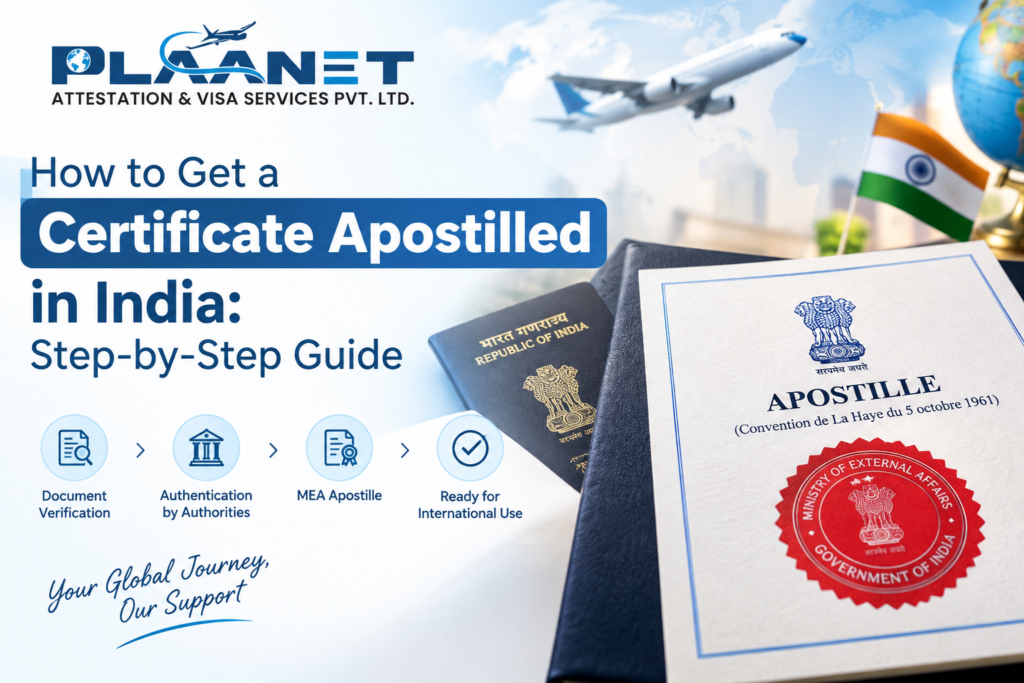
How to Get a Certificate Apostilled in India: Step-by-Step Guide

Post Views: 23 If you are planning to study, work, settle, get married, or do business abroad, you may be asked to authenticate your Indian documents before they are accepted by a foreign authority. One of the most commonly required forms of document authentication is an apostille. If you are wondering how to get a Certificate Apostilled in India, this guide explains the process, required documents, approximate steps, and important points you should know before submitting your certificate. What Is an Apostille? An apostille is a form of authentication used to certify the origin of a public document for use in another country that is a member of the Hague Apostille Convention. In India, apostille services are handled by the Ministry of External Affairs (MEA). The apostille certificate confirms the authenticity of the signature, seal, or stamp on the document so that it can be presented to the relevant authority in another participating country. Documents that may require an apostille include: Educational certificates Degree and diploma certificates Birth certificates Marriage certificates Experience certificates Affidavits Power of Attorney Commercial documents Other eligible public documents Who Needs a Certificate Apostilled in India? A Certificate Apostilled in India may be required when you need to submit an Indian document to a foreign government, university, employer, immigration authority, or other organization. Common situations include: Studying abroad Applying for an overseas job Moving to another country Applying for a family or dependent visa International marriage or family-related procedures Immigration and residency applications Starting or expanding an international business Submitting documents to foreign authorities The exact requirements can vary depending on the destination country and the type of document. How to Get a Certificate Apostilled in India The apostille process generally involves document verification followed by authentication through the appropriate authorities. Step 1: Identify the Document That Needs Apostille First, determine which certificate or document needs to be apostilled. For example, depending on your purpose, you may need: Degree certificate Diploma certificate Birth certificate Marriage certificate Experience certificate Commercial document Affidavit Check with the foreign university, employer, embassy, immigration authority, or other receiving organization to confirm exactly which documents are required. Step 2: Check Whether Pre-Authentication Is Required The authentication process can depend on the type of document. Educational, personal, and commercial documents may follow different verification procedures before they are submitted for apostille. For example, educational documents may require verification through the appropriate state authority or educational department before MEA apostille. Personal documents may require authentication from the relevant state or local authority. Because requirements can vary, it is important to verify the correct procedure before submitting your original documents. Step 3: Prepare Your Original Documents Make sure your documents are complete, legible, and in acceptable condition. Depending on the document and procedure, you may need: Original certificate Supporting documents Identification documents Copies of documents Application or authorization details Avoid submitting damaged, altered, or unclear documents because they may cause delays during verification. Step 4: Complete the Required Authentication Before the MEA apostille can be issued, certain documents may need authentication from the appropriate authority. The authority involved depends on the type of certificate. For example: Educational documents: May require verification/authentication through the relevant educational or state authority. Personal documents: May require authentication through the appropriate state or local authority. Commercial documents: May follow a separate commercial-document authentication procedure. The correct pre-authentication route should be confirmed based on your document and destination country. Step 5: Submit the Document for MEA Apostille Once the required authentication has been completed, the document can proceed for MEA apostille through the applicable authorized process. The Ministry of External Affairs applies the apostille to eligible documents after the required authentication steps have been completed. The apostille contains information that allows the receiving authority to verify the authentication. Step 6: Collect the Apostilled Certificate After the apostille process is completed, your document is returned with the apostille attached. Before using the document, check: Your name and document details Apostille information Document condition Whether additional translation is required Whether the destination authority has any additional requirements How Long Does It Take to Get a Certificate Apostilled in India? The processing time can vary depending on: Type of certificate Issuing authority State of issuance Verification requirements Destination country Current processing workload Whether additional authentication is required For this reason, it is better to start the process well before your visa, university admission, employment, or immigration deadline. Apostille vs Attestation: What Is the Difference? Apostille and attestation are related to document authentication but are not the same process. An apostille is generally used for documents intended for countries that participate in the Hague Apostille Convention. Embassy or consular attestation may be required for documents intended for countries or purposes where apostille is not the applicable authentication route. Therefore, you should confirm the document legalization requirements of your destination country before beginning the process. Common Documents That Can Require Apostille Depending on the purpose and destination, people may need apostille services for: Educational Documents Degree certificates Diploma certificates Mark sheets Educational certificates Transcripts Personal Documents Birth certificates Marriage certificates Affidavits Experience certificates Other personal records Commercial Documents Commercial agreements Certificates of incorporation Business documents Invoices Powers of Attorney Other documents used for international business The exact eligibility and authentication requirements depend on the document and its intended use. Common Mistakes to Avoid When Getting a Certificate Apostilled in India Choosing the Wrong Authentication Process Not every foreign document requirement involves an apostille. Confirm whether your destination country requires apostille, embassy attestation, or another form of legalization. Submitting Documents Without Required Verification Some certificates require prior authentication before they can proceed to the apostille stage. Waiting Until the Last Minute Verification and authentication can take time. Starting early can help avoid problems close to your travel, admission, employment, or visa deadline. Ignoring Translation Requirements Some foreign authorities may require documents to be translated into their official language. Not Checking Destination-Country Requirements Requirements can differ between countries and even between different types of applications. Always confirm

How to Get a Certificate Apostilled in India: Step-by-Step Guide Read More »

Embassy Attestation