If you are planning to study, work, settle, get married, or do business abroad, you may be asked to authenticate your Indian documents before they are accepted by a foreign authority. One of the most commonly required forms of document authentication is an apostille.
If you are wondering how to get a Certificate Apostilled in India, this guide explains the process, required documents, approximate steps, and important points you should know before submitting your certificate.
What Is an Apostille?
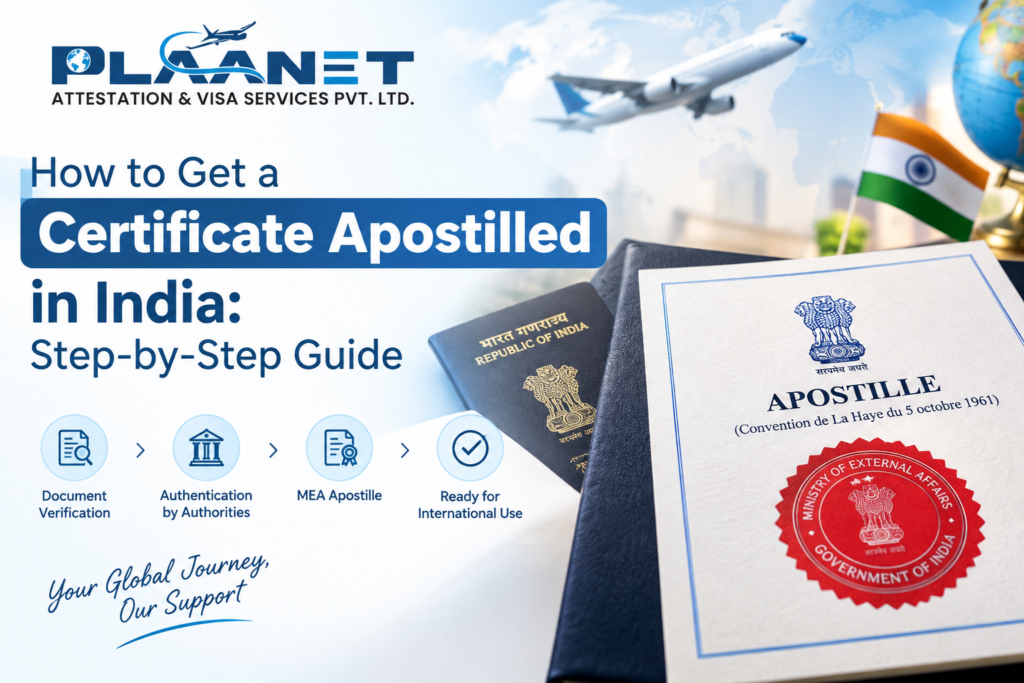
An apostille is a form of authentication used to certify the origin of a public document for use in another country that is a member of the Hague Apostille Convention.
In India, apostille services are handled by the Ministry of External Affairs (MEA). The apostille certificate confirms the authenticity of the signature, seal, or stamp on the document so that it can be presented to the relevant authority in another participating country.
Documents that may require an apostille include:
- Educational certificates
- Degree and diploma certificates
- Birth certificates
- Marriage certificates
- Experience certificates
- Affidavits
- Power of Attorney
- Commercial documents
- Other eligible public documents
Who Needs a Certificate Apostilled in India?
A Certificate Apostilled in India may be required when you need to submit an Indian document to a foreign government, university, employer, immigration authority, or other organization.
Common situations include:
- Studying abroad
- Applying for an overseas job
- Moving to another country
- Applying for a family or dependent visa
- International marriage or family-related procedures
- Immigration and residency applications
- Starting or expanding an international business
- Submitting documents to foreign authorities
The exact requirements can vary depending on the destination country and the type of document.
How to Get a Certificate Apostilled in India
The apostille process generally involves document verification followed by authentication through the appropriate authorities.
Step 1: Identify the Document That Needs Apostille
First, determine which certificate or document needs to be apostilled.
For example, depending on your purpose, you may need:
- Degree certificate
- Diploma certificate
- Birth certificate
- Marriage certificate
- Experience certificate
- Commercial document
- Affidavit
Check with the foreign university, employer, embassy, immigration authority, or other receiving organization to confirm exactly which documents are required.
Step 2: Check Whether Pre-Authentication Is Required
The authentication process can depend on the type of document.
Educational, personal, and commercial documents may follow different verification procedures before they are submitted for apostille.
For example, educational documents may require verification through the appropriate state authority or educational department before MEA apostille.
Personal documents may require authentication from the relevant state or local authority.
Because requirements can vary, it is important to verify the correct procedure before submitting your original documents.
Step 3: Prepare Your Original Documents
Make sure your documents are complete, legible, and in acceptable condition.
Depending on the document and procedure, you may need:
- Original certificate
- Supporting documents
- Identification documents
- Copies of documents
- Application or authorization details
Avoid submitting damaged, altered, or unclear documents because they may cause delays during verification.
Step 4: Complete the Required Authentication
Before the MEA apostille can be issued, certain documents may need authentication from the appropriate authority.
The authority involved depends on the type of certificate.
For example:
Educational documents:
May require verification/authentication through the relevant educational or state authority.
Personal documents:
May require authentication through the appropriate state or local authority.
Commercial documents:
May follow a separate commercial-document authentication procedure.
The correct pre-authentication route should be confirmed based on your document and destination country.
Step 5: Submit the Document for MEA Apostille
Once the required authentication has been completed, the document can proceed for MEA apostille through the applicable authorized process.
The Ministry of External Affairs applies the apostille to eligible documents after the required authentication steps have been completed.
The apostille contains information that allows the receiving authority to verify the authentication.
Step 6: Collect the Apostilled Certificate
After the apostille process is completed, your document is returned with the apostille attached.
Before using the document, check:
- Your name and document details
- Apostille information
- Document condition
- Whether additional translation is required
- Whether the destination authority has any additional requirements
How Long Does It Take to Get a Certificate Apostilled in India?
The processing time can vary depending on:
- Type of certificate
- Issuing authority
- State of issuance
- Verification requirements
- Destination country
- Current processing workload
- Whether additional authentication is required
For this reason, it is better to start the process well before your visa, university admission, employment, or immigration deadline.
Apostille vs Attestation: What Is the Difference?
Apostille and attestation are related to document authentication but are not the same process.
An apostille is generally used for documents intended for countries that participate in the Hague Apostille Convention.
Embassy or consular attestation may be required for documents intended for countries or purposes where apostille is not the applicable authentication route.
Therefore, you should confirm the document legalization requirements of your destination country before beginning the process.
Common Documents That Can Require Apostille
Depending on the purpose and destination, people may need apostille services for:
Educational Documents
- Degree certificates
- Diploma certificates
- Mark sheets
- Educational certificates
- Transcripts
Personal Documents
- Birth certificates
- Marriage certificates
- Affidavits
- Experience certificates
- Other personal records
Commercial Documents
- Commercial agreements
- Certificates of incorporation
- Business documents
- Invoices
- Powers of Attorney
- Other documents used for international business
The exact eligibility and authentication requirements depend on the document and its intended use.
Common Mistakes to Avoid When Getting a Certificate Apostilled in India
- Choosing the Wrong Authentication Process
Not every foreign document requirement involves an apostille. Confirm whether your destination country requires apostille, embassy attestation, or another form of legalization.
- Submitting Documents Without Required Verification
Some certificates require prior authentication before they can proceed to the apostille stage.
- Waiting Until the Last Minute
Verification and authentication can take time. Starting early can help avoid problems close to your travel, admission, employment, or visa deadline.
- Ignoring Translation Requirements
Some foreign authorities may require documents to be translated into their official language.
- Not Checking Destination-Country Requirements
Requirements can differ between countries and even between different types of applications. Always confirm the requirements of the organization receiving your document.
Why Choose Professional Apostille Assistance?
The apostille process can involve multiple steps depending on the type of document. Professional assistance can help you understand the applicable authentication route, prepare the required paperwork, and coordinate the process.
Plaanet Attestation & Visa Services provides assistance with document attestation and apostille-related requirements for individuals and businesses planning to use Indian documents internationally.
Whether you need assistance with an educational certificate, personal document, commercial document, or other eligible certificate, understanding the correct authentication procedure is an important first step.
Final Checklist for Getting a Certificate Apostilled in India
Before starting the process, make sure you have:
- Identified the correct document
- Confirmed the destination country’s requirements
- Checked whether pre-authentication is required
- Prepared the original certificate
- Prepared supporting documents
- Checked translation requirements
- Started the process early
- Confirmed whether apostille or embassy attestation is required
Get Assistance With Certificate Apostille in India
Getting a Certificate Apostilled in India can seem complicated when you are unfamiliar with the authentication process. The requirements can also vary depending on the document, issuing authority, and destination country.
If you need help understanding the apostille or document attestation process, Plaanet Attestation & Visa Services can assist you with your document authentication requirements.
For more information about apostille and attestation services, visit Plaanet Attestation & Visa Services and discuss your specific document requirements with their team.
Plan your international document requirements early to avoid unnecessary delays.